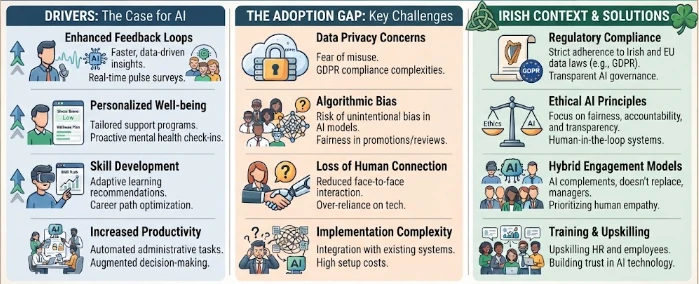
AI-enabled employee engagement includes survey analytics, sentiment analysis, personalized recommendations, workforce listening, communication tools, and manager decision support, all operating within sensitive employment relationships. The article compares humans and algorithms on matched tasks, information, and outcome horizons rather than benchmark scores alone. Human context and judgment are weighed against algorithmic scale and repeatability, while hybrid rules, disagreement analysis, blind
This article compares human and algorithmic decision making for Omnichannel Attribution in Canadian Markets, focusing on downstream decision quality rather than prediction accuracy alone. It estimates how online and offline touchpoints contribute to conversion, while identity gaps, walled-garden platforms and the difference between observed credit and causal incrementality complicate interpretation. Human judgment contributes context, tacit knowledge, strategic interpretation and sensitivity to
AI business model renewal concerns changes in value creation, value delivery, and value capture through AI-enabled services, workflow redesign, personalization, pricing support, and new information products. The article emphasizes real-world causal testing through random assignment, phased rollouts, encouragement designs, or cluster experiments. It calls for pre-specified outcomes, contamination controls, comparisons among human-only, algorithm-only, and hybrid workflows, and stop rules when har
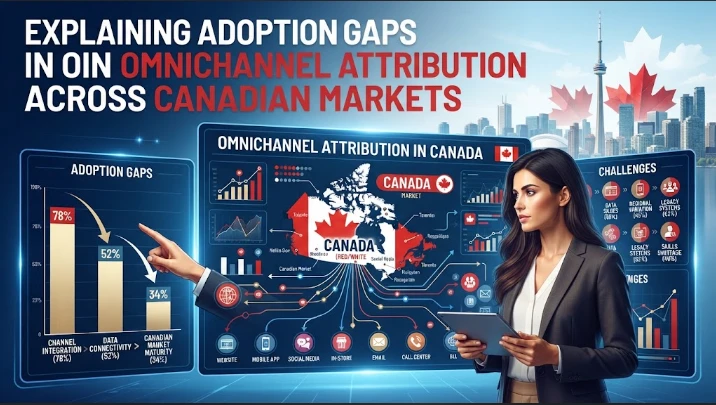
This article explains uneven adoption of Omnichannel Attribution across Canadian Markets, arguing that differences in capability and readiness matter as much as enthusiasm for new technology. It estimates how online and offline touchpoints contribute to conversion, while identity gaps, walled-garden platforms and the difference between observed credit and causal incrementality complicate interpretation. Larger or more mature organizations can invest in data engineering, experimentation, governan
This article explains why Omnichannel Attribution can fail in Canadian Markets even when the underlying analytical model appears technically strong. It estimates how online and offline touchpoints contribute to conversion, while identity gaps, walled-garden platforms and the difference between observed credit and causal incrementality complicate interpretation. The main failure modes arise earlier in the system: fragmented identifiers and definitions, weak ownership, vague objectives, poor basel
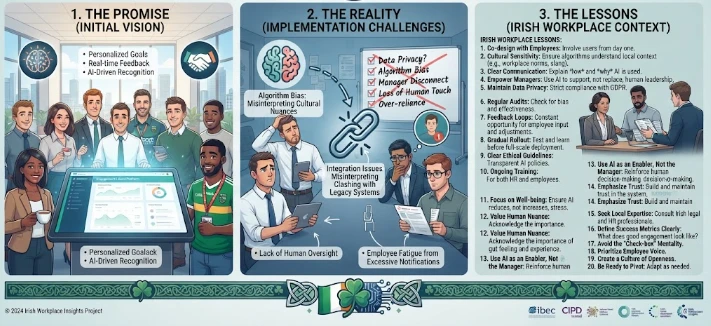
AI-enabled employee engagement includes survey analytics, sentiment analysis, personalized recommendations, workforce listening, communication tools, and manager decision support, all operating within sensitive employment relationships. The article shows how implementation can fail even when the model still operates. Data fragmentation, proxy metrics, workflow friction, unclear ownership, and misaligned incentives can disconnect analytics from value, so baseline comparisons, balanced measures, i
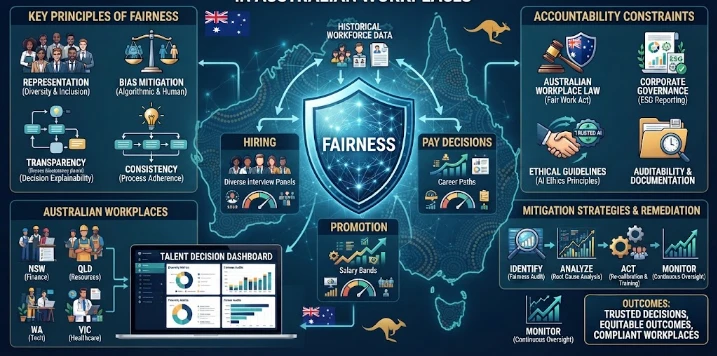
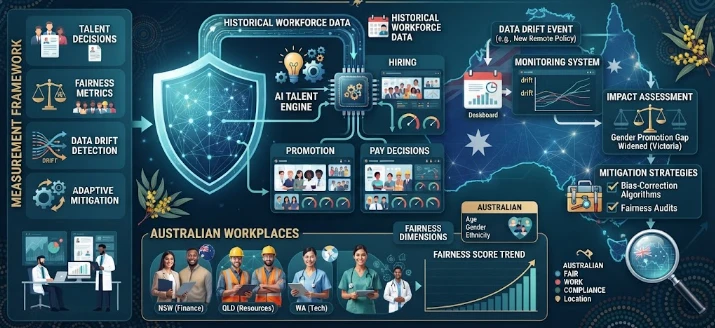
Talent decision fairness covers recruitment, promotion, performance management, development, scheduling, and related employment decisions, with particular attention to proxies, subgroup outcomes, accessibility, and calibration. The article keeps accountability with the deploying organization through named owners, separation of development and approval authority, reproducible documentation, meaningful human oversight, and formal reassessment when scope, data, vendors, or policies change. Override
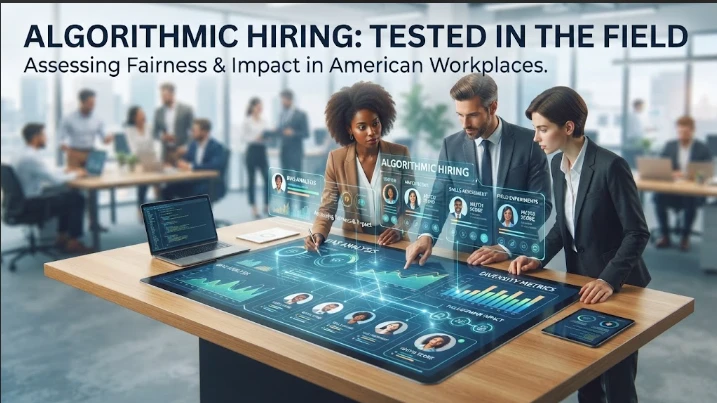
This article evaluates Algorithmic Hiring in American Workplaces through field experiments designed to test whether analytical or automated interventions improve outcomes under real operating conditions. It covers sourcing, screening, assessment, ranking, interviewing and recommendation, where candidate access, protected-group outcomes, productivity and experience can diverge across stages. A credible experiment begins with a narrow treatment, prespecified outcomes and explicit attention to both
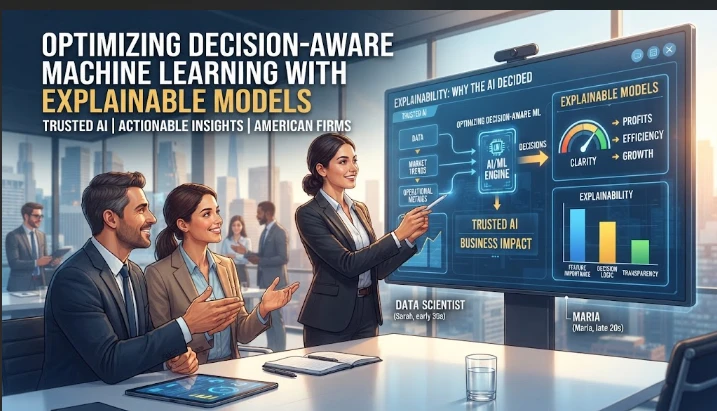
Talent decision fairness covers recruitment, promotion, performance management, development, scheduling, and related employment decisions, with particular attention to proxies, subgroup outcomes, accessibility, and calibration. The article treats explainability as useful only when it changes or supports action. It compares transparent and complex models, tests explanation stability, warns that feature importance is not causality, and incorporates fairness, calibration, error costs, operational c
Platform competition analytics examines network effects, pricing, participation, ranking, advertising, switching, access conditions, and strategic interaction across digital ecosystems shaped by previous product and policy choices. The article shifts attention from prediction to intervention by defining treatment, outcome, population, time horizon, and the counterfactual. It highlights confounding in historical business data and uses experiments, natural experiments, quasi-experimental designs,
AI-enabled employee engagement includes survey analytics, sentiment analysis, personalized recommendations, workforce listening, communication tools, and manager decision support, all operating within sensitive employment relationships. The article explains adoption gaps through organizational capability rather than enthusiasm alone. Data maturity, infrastructure, governance, privacy processes, leadership support, incentives, switching costs, and local evidence determine whether advanced analyti
This article considers how explainable modeling can improve Decision-Aware Machine Learning in American Firms by linking interpretation to real decisions rather than treating explanation as a dashboard feature. It treats prediction as a means to action and evaluates technical model behavior together with the downstream business, fairness, safety, service and resource consequences of decisions. It argues that optimization should balance predictive performance with interpretability, error costs, c
Advanced Analytics, Causal Methods & Model ReliabilityView Abstract →
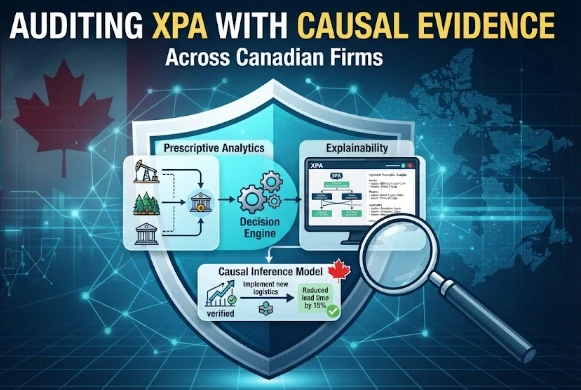
Explainable prescriptive analytics goes beyond predicting outcomes by recommending actions under objectives and constraints, which requires separating predictive models, causal assumptions, optimization rules, and business limits. The article shifts attention from prediction to intervention by defining treatment, outcome, population, time horizon, and the counterfactual. It highlights confounding in historical business data and uses experiments, natural experiments, quasi-experimental designs, s
Talent decision fairness covers recruitment, promotion, performance management, development, scheduling, and related employment decisions, with particular attention to proxies, subgroup outcomes, accessibility, and calibration. The article distinguishes data drift from concept drift and separates model quality from decision quality. It favors temporal validation, subgroup monitoring, statistical drift signals interpreted with business context, and pre-defined triggers for recalibration, retraini
This article examines how Decision-Aware Machine Learning should be governed in American Firms when analytical recommendations influence consequential organizational decisions. It treats prediction as a means to action and evaluates technical model behavior together with the downstream business, fairness, safety, service and resource consequences of decisions. Its central principle is that responsibility remains with the deploying organization: software or vendors do not absorb legal, managerial
Advanced Analytics, Causal Methods & Model ReliabilityView Abstract →
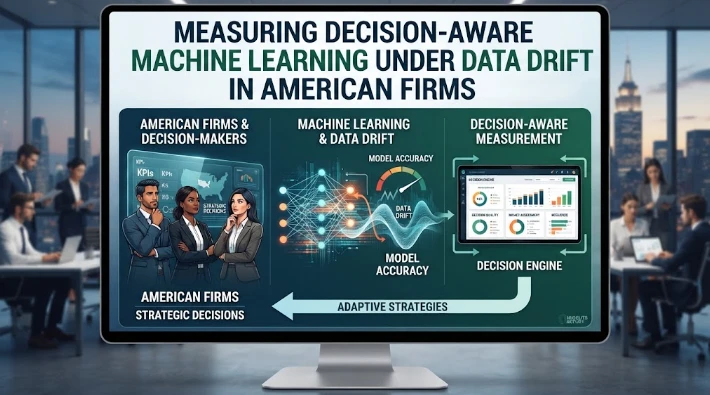
This article examines Decision-Aware Machine Learning in American Firms, arguing that technical performance is insufficient unless analytical outputs continue to improve real decisions as operating conditions change. It treats prediction as a means to action and evaluates technical model behavior together with the downstream business, fairness, safety, service and resource consequences of decisions. It treats data drift and concept drift as normal operating conditions that can alter inputs, pred
Advanced Analytics, Causal Methods & Model ReliabilityView Abstract →